
GEKIKEN SCHOOL
Gekiken Taisoho (Foundational Training Method)
Gekiken Taisōhō is a structured training program centered on elements derived from the club director’s research into Tennen Rishin-ryū (天然理心流), combined with training components drawn from the study of densho of Shindō Fusō-ryū (神道扶桑流) and the “Shinan Gekiken Taisōhō” (新案撃剣体操法), as well as practice methods from Japanese jujutsu and Chinese martial arts.
Its purpose is to provide a systematic pathway that allows practitioners, regardless of prior experience, to progress smoothly toward free exchange using the shinai (Gekiken).
This system progresses through the following stages:
• Shoden (初段): Development of body mechanics and acquisition of the fundamental movements required within the club.
• Chūden (弐段): Introduction of responsive techniques, close-range engagement (tsubazeriai), and basic throwing methods.
• Okuden (参段): Refinement of initiating techniques and a deeper understanding of the practical flow and exchanges within Gekiken.
Note: Yondan (肆段) and above focus on deeper levels of understanding. Further development toward Tennen Rishin-ryū (天然理心流) research elements is currently under consideration.
Advancement in rank is evaluated based on technical accuracy, the ability to apply techniques in free practice, and appropriate conduct. The objective is not the attainment of rank itself, but the steady refinement of effective and functional technique.
Historically, as Gekiken equipment became standardized, its form gradually evolved toward what is now modern kendo. However, our aim is to practice Gekiken in a form closer to its earlier stages, where movements derived from kata were expressed more directly and each practitioner’s individual character could be fully manifested.
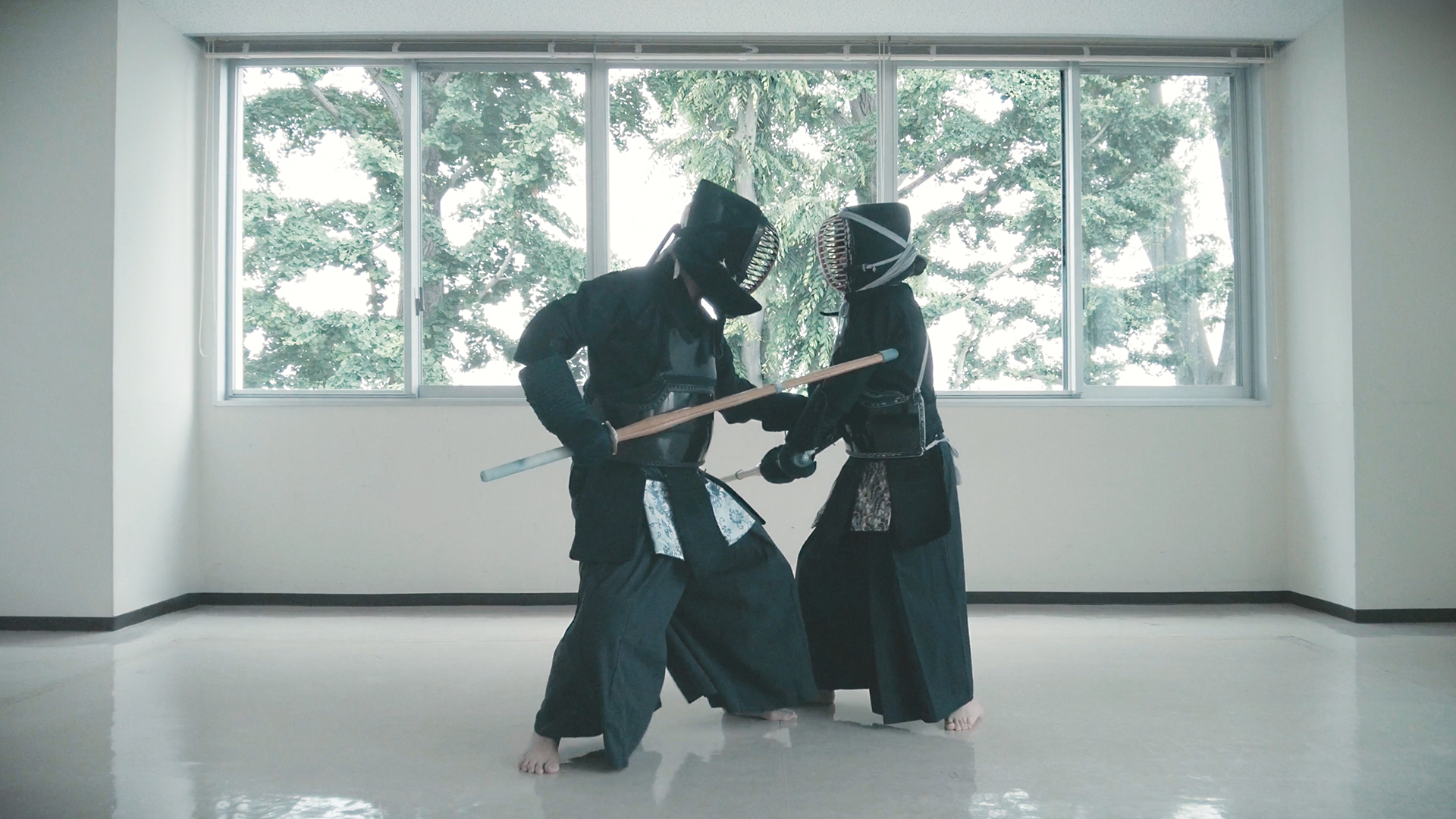
The Gekiken School
Gekiken Taisōhō is designed to provide beginners with the foundational skills necessary to participate in Gekiken.
However, it is also open to practitioners who already have experience in budō or other traditional martial arts.
Gekiken Taisōhō is not a “ryūha” (martial lineage or school).
Its purpose is to offer a clear and practical approach to sword training, grounded in classical principles of movement, while developing the ability to function effectively within free exchange.
For beginners:
It provides a structured and progressive path that enables smooth participation in Gekiken.
For practitioners of traditional schools:
Gekiken Taisōhō is primarily intended for those who do not already belong to a specific style or lineage. As such, some of the content may differ from the techniques you have previously learned. By participating in this program, it is important to understand and accept these differences.
Instruction for Overseas Practitioners
The Tokyo Gekiken Club also provides Gekiken Taisōhō instruction for practitioners outside Japan.
Each stage of training is delivered through intensive seminars lasting one to two days, during which participants learn the necessary concepts, forms, training methods, and technical principles. After completing the seminar, participants are expected to continue training independently for approximately one year while maintaining regular contact with the club. Training materials are provided, and technical progress is monitored through ongoing online guidance and analysis.
At the end of this one-year training period, a practical examination is conducted to assess technical accuracy, the ability to apply techniques in free practice, and appropriate conduct. Only upon passing this examination may the practitioner advance to the next stage.
After completing Okuden (参段) and successfully passing the instructor qualification examination, practitioners are recognized as having demonstrated sufficient technical ability and understanding within the framework of the Tokyo Gekiken Club. This may lead to certification as an instructor and, if desired, the possibility of establishing and operating a club in their home country. However, this does not grant the authority to issue ranks or certify other instructors.
This process is rigorous. At every stage, technical quality, realism, and responsible conduct are essential.