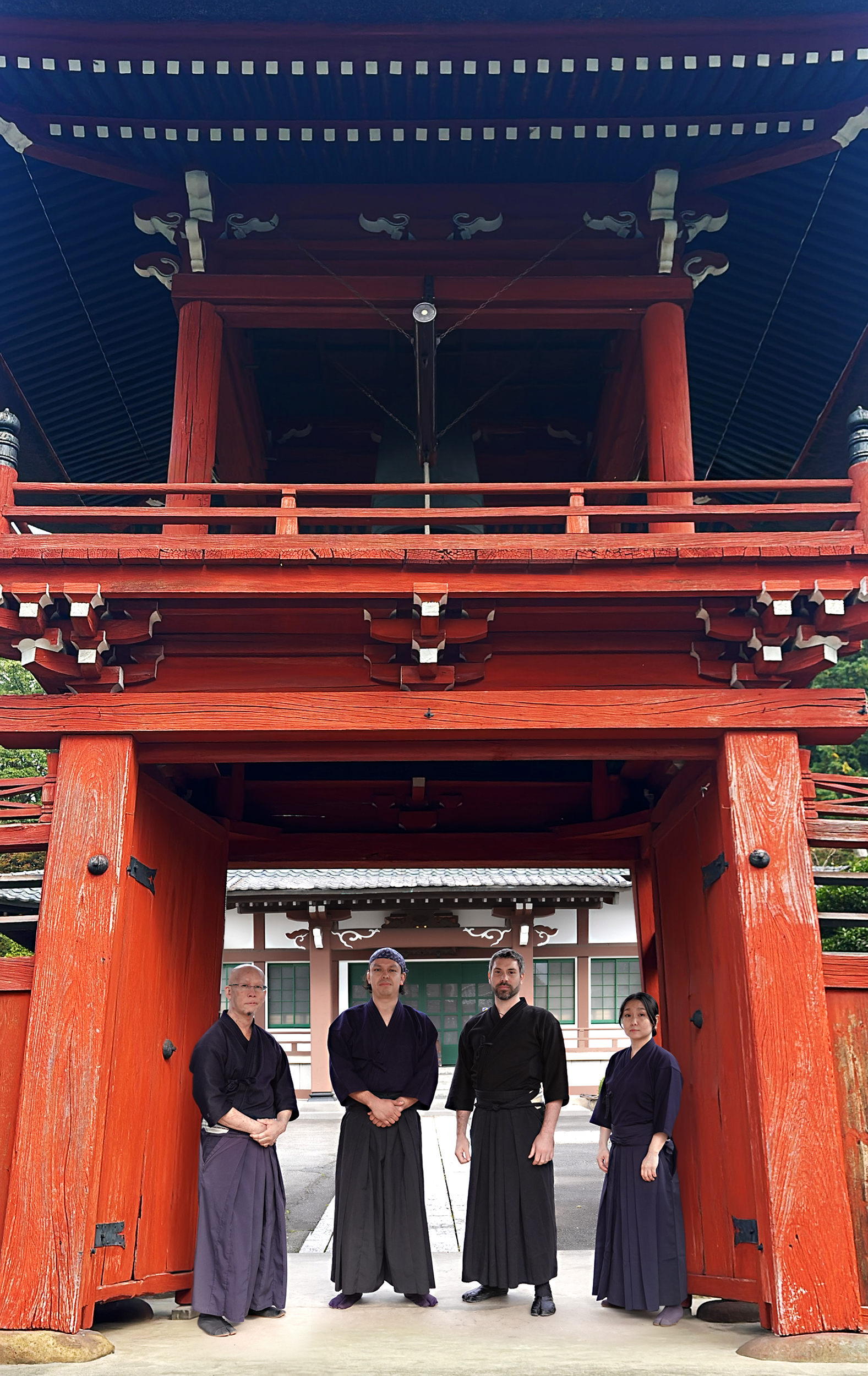
THE CLUB
Mission
The mission of the Tokyo Gekiken Club is to research, practice, and promote Gekiken, understood as a traditional form of free martial exchange in which practitioners of different schools test their abilities beyond formal kata, free from modern competitive rule structures.
The club provides an open, controlled, and non-competitive environment in which this exchange takes place without instruction, evaluation, or criticism of another participant’s school or style.
We do not seek to replicate the Gekiken of the Meiji–Taishō period. Rather, our exploration aim to evoke the spirit of Gekiken from that era, which prioritized free confrontation as an essential means of verifying martial skill, or it may ultimately lead to the creation of an entirely new form of movement.
In our practice, the shinai is understood to represent a real blade, and practitioners refine their technique through direct engagement while maintaining responsibility and control.
Through activities and outreach both within Japan and internationally, the Tokyo Gekiken Club supports the promotion of Japanese budō by fostering exchange among practitioners of traditional martial schools as well as modern disciplines that include weapon training. We value mutual respect and direct engagement among practitioners, regardless of school or origin.
Our Approach
At the Tokyo Gekiken Club, we do not hold matches with referees or point-based judging. Any fixed system for determining victory inevitably shifts training toward scoring rather than cultivating genuine technique. For this reason, our practice avoids formal competition.
Our jigeiko is conducted with as few constraints as possible. Movements are not shaped to fit modern competitive formats, but are explored freely within a controlled training environment.
This practice demands mental discipline. Participants must maintain the intent to engage decisively while remaining mindful not to injure their partner. The shinai is treated as a blade, and practitioners are expected to recognize effective strikes through their own awareness rather than external judgment.
Winning and losing are secondary. What matters is the practitioner’s ability to reflect on their performance, maintain humility, and refine their understanding through direct experience.